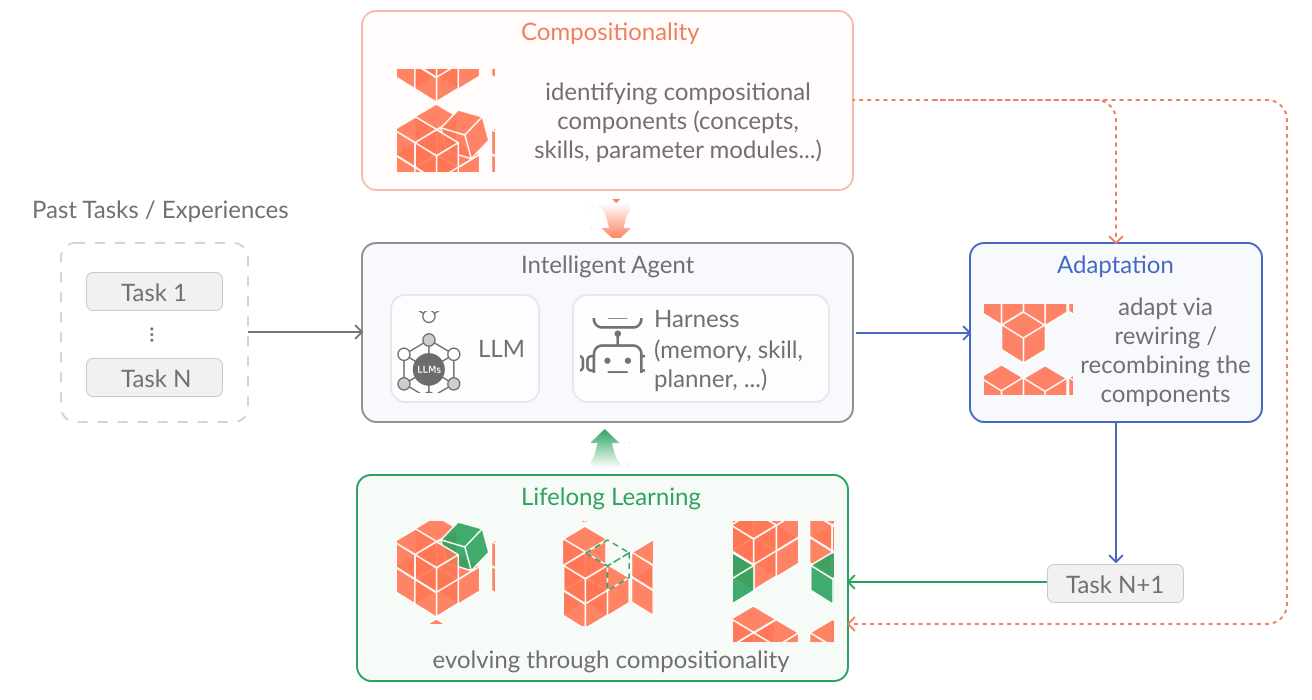
Understanding & building compositionality
We study whether and how foundation models can identify compositional components across three levels: concepts, reasoning patterns, and parameter modules. Our goal is to make model capabilities more interpretable, diagnosable, and reusable, so that complex abilities can be later built by composing well-defined components.
- Concepts: extracting reusable multimodal semantic components from tokens, pixels, and latent representations. Related: Concept-Guided Tokenization; Plug-and-Play Compositionality; Visualization of Multimodal Concepts.
- Reasoning patterns: decomposing long-chain and multi-hop reasoning into structural sub-patterns. Related: LCoT2Tree / What Makes a Good Reasoning Chain?; Reasoning Pattern Discrepancy in Long-CoT SFT.
- Parameter modules: discovering sparse experts and dynamic modular routing inside foundation models. Related: Automatic Expert Discovery in LLM Upcycling.
- Skills: ongoing